BEM’s study of coastal erosion at Air Force facilities in Arctic Alaska has been cited in the Alaska Daily News! Click here to view the article!
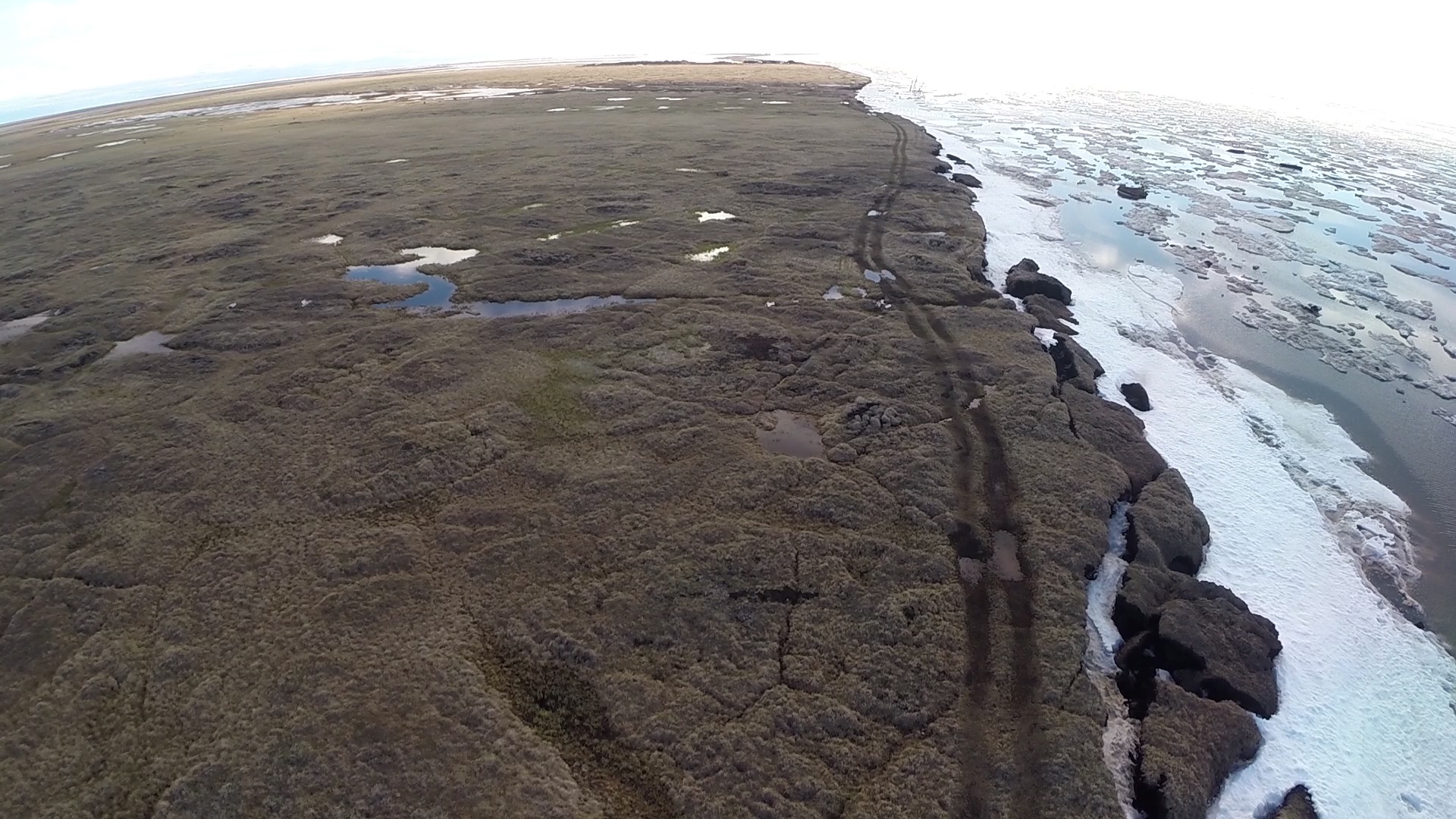
Niche-block erosion along Alaska’s Arctic coast results from wave action undermining the bluff face, leading to collapse of large blocks of shoreface.
While performing environmental restoration at multiple U.S. Air Force (USAF) radar facilities along the Arctic Coast of Alaska, for the Air Force Civil Engineer Center (AFCEC), BEM Systems, Inc. (BEM) noted the effects of severe shoreline erosion in documenting the loss of hundreds of feet of land that had been washed away over a few years. This drastic loss of coastline was not only impacting the sites to be restored along the shore’s edge, but actually threatening the basic infrastructure of the USAF facilities themselves.
When AFCEC was made aware of this, they commissioned BEM to conduct a study of the risk posed by coastal erosion on USAF facilities located along the 680-mile shoreline of Arctic Alaska. BEM performed a preliminary risk assessment of the various built and natural assets at three active Long Range Radar Installations (LRRS), based on their relative importance to the USAF mission and their erosion vulnerability scores (Risk = Importance x Vulnerability). Asset importance was determined through interviews with USAF staff combined with findings from reviewing published data. Vulnerability was determined through analysis of erosion potential, and projections of the time until an asset was expected to be exposed to the Arctic Ocean. It is generally accepted that erosion rates are the result of accelerated climate change. But the conventional method of using linear regression statistical approaches could not account for the actual shoreline recession rates, which were greatly underestimated when applying this method. To account for recent increases, a non-linear regression approach was used to evaluate future shoreline measurements, which showed rates of erosion accelerating over the foreseeable future. But neither statistical approach directly accounted for the influences of climate change—specifically increasing water temperatures and wave climate, which is the distribution of the offshore wave height, period, and direction at a particular location.
Working in conjunction with Dr. Thomas Ravens, Professor of Civil Engineering at the University of Alaska at Anchorage, BEM evaluated a range of predictive models that could be applied to the most at-risk sites to provide a more accurate forecast of coastal erosion over the next fifty years. A process-based model was identified as having the greatest potential for application to coastal facilities in Arctic Alaska. This model includes, as drivers, important components for accurately predicting erosion rates along arctic shorelines: water temperature; water set up during storm events; direction and amplitude of wind-driven waves; and shoreline geomorphology, including bluff presence, slope, ice content, and sediment grain size. While this process-based model continues to be developed in the next phase of work, the non-linear erosion model can be applied to provide a better estimate of future erosion than the linear regression approach. Applying this quicker methodology affords the USAF the opportunity to make more immediate informed decisions with regard to managing their assets and proactively planning resilience measures.
The culmination of BEM’s efforts resulted in Mr. Mark Nardolillo, BEM’s CEO, being invited by AFCEC to present the results of the study to the Climate Change Adaptation Working Group (CCAWG) at the Pentagon on 7 September 2015. The CCAWG includes representatives from the Office of the Secretary of Defense (OSD), all branches of the military, and the Strategic Environmental Research and Development Program (SERDP) to provide assistance to the OSD in formulating Department of Defense policy and guidance for responding to the risks posed by climate change on the military’s infrastructure and operations. With the recently published DoD Directive 4715.21 (“Climate Change Adaptation and Resilience,” January 14, 2016), the leadership of the military commands must now incorporate into their strategic plans the risks posed by climate change in maintaining operational readiness and enhancing their infrastructure. The presentation was well-received and the CCAWG expressed a strong interest in pushing this research forward.