
Natural & Water Resources
The Natural and Water Resources (N&WR) service area provides comprehensive environmental planning, science, and engineering services that support ecosystem restoration and mitigation projects in coastal, riparian, and upland habitats from Florida to Alaska. The N&WR service group consists of aquatic and wetland ecologists, fisheries scientists, environmental planners and engineers, geologists, chemists, GIS specialists, and technical writers with experience in planning, designing, managing, and implementing restoration projects nationwide.
BEM’s ecosystem restoration projects range from the Gulf Coast Region in the Southeastern United States to the Arctic shores of Alaska. We approach environmental stewardship through the pairing of the human and natural environments—especially in areas where cultural and economic ties to the environment require sustainable solutions. Our understanding of the ecological interrelationships between the physical and biological worlds helps us define solutions that meet regulatory and societal needs. As federal and local governments embark on new challenges in managing natural and water resources to meet the conflicting demands of flood protection, water supply, and ecosystem enhancement and restoration, BEM is positioned to guide them in making the most efficient use of limited funding.
BEM is distinguished within the industry for identifying successful approaches that uniquely integrate science, modeling, and engineering. We are also recognized for incorporating advanced information management technology in developing solutions for our clients’ complex environmental needs. Over the past 20 years BEM has worked on major elements of two of the largest restoration programs in the U.S.—1) Everglades Restoration in South Florida, including the Comprehensive Everglades Restoration Plan (CERP) and the Kissimmee River Restoration Project; and 2) Coastal Louisiana Ecosystem Restoration. Our expertise gained from CERP has helped Louisiana to implement projects in their Comprehensive Master Plan for a Sustainable Coast, including comprehensive environmental planning and science services for Louisiana’s CPRA—specifically relating to NEPA compliance, permitting, and E&D feasibility studies. BEM is generally regarded as CPRA’s “go to” firm for navigating the NEPA process and for working effectively with the USACE-New Orleans District and other federal agencies during the complex planning and design stages.
Everglades Restoration in South Florida
In the late 1990s to early 2000s, BEM assisted the South Florida Water Management District (SFWMD) with their initiative to assess and restore the hydrology, water quality, and habitat of Central and Southern Florida, specifically the region referred to as the “River of Grass” or Everglades. The objective of this initiative was to maximize benefits from ecosystem restoration projects with an emphasis on surface water quality improvement and water storage for current and future needs. In support of the CERP and its major restoration initiative, the $8B+ “Acceler8” program, BEM performed a number of biological, ecological, and hydrological studies that would be central to understanding how the natural systems would respond to these restoration projects. BEM also helped evaluate resource needs for the Comprehensive Land Acquisition Program, which has the goal of revitalizing more than 400,000 acres of the South Florida ecosystem through 2050, as documented in the State’s Water Resources Development Act of 2000.
Coastal Louisiana Ecosystem Restoration
For over 10 years BEM has been working for the Louisiana Coastal Protection and Restoration Authority (CPRA, formerly LDNR and OCPR), providing a full range of environmental science and engineering services in coastal Louisiana. In addition to performing project-specific tasks, such as monitoring and biological surveys, BEM has drafted major environmental impact statements for CPRA. These included the Southwest Coastal Louisiana Feasibility Study, the Stabilize Gulf Shoreline at Point Au Fer Island project, and the Maintain Land Bridge Between Caillou Lake and Gulf of Mexico project. BEM performed the benefits analysis using the Wetland Value Assessment methodology, and conducted Phase I Environmental Site Assessments, Colonial/Nesting Waterbird Surveys, and environmental surveys for contaminants from the Deepwater Horizon oil spill. The primary value BEM brings to CPRA is our experience in plan formulation in support of Civil Works feasibility studies that are co-sponsored with the USACE, helping the agency navigate the Federal process to get feasibility studies completed quickly with minimal comment or delays.
BEM’s Natural and Water Resources service area offers several services that are necessary to implement ecosystem restoration projects. These include:
Resources Planning, Project, and Program Management
Environmental Studies and Reports
Wetland Services
Environmental Modeling and Data Analysis
Compliance and Permitting
Environmental Characterization and HTRW Assessments
Representative Projects
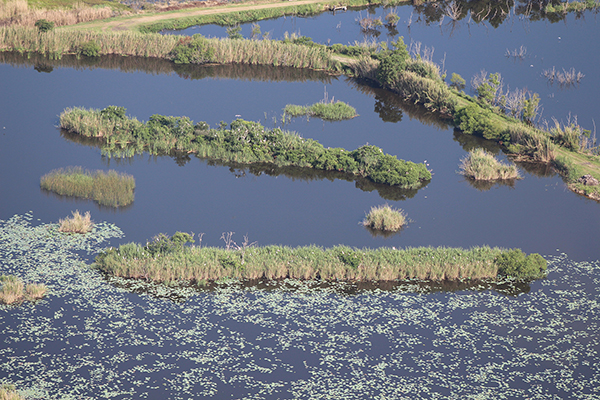
Southwest Coastal Louisiana Feasibility Study, CPRA, LA. The Southwest Coastal Louisiana (SWCL) Feasibility Study integrate two purposes: flood risk reduction and ecosystem restoration.
Read More
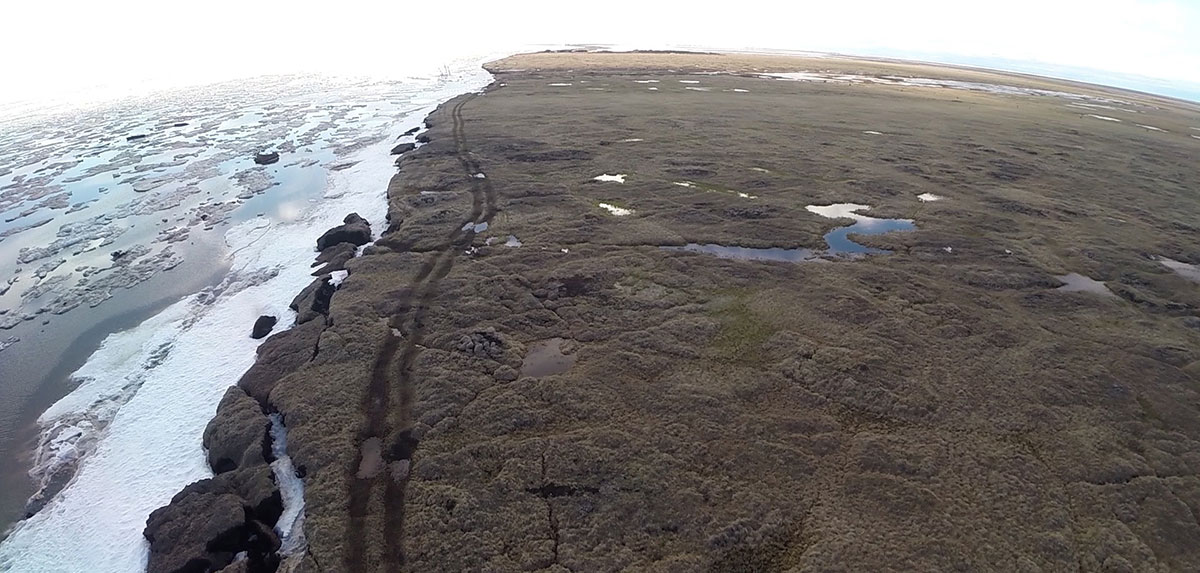
AFCEC Assignment for Study on Risks from Coastal Erosion along the Arctic Coast of Alaska, DoD, AK. While performing environmental restoration at multiple U.S. Air Force (USAF) radar facilities along the Arctic Coast of Alaska, for the Air Force Civil Engineer Center (AFCEC), BEM Systems, Inc. (BEM) noted the effects of severe shoreline erosion in documenting the loss of hundreds of feet of land that had been washed away over a few years.
Read More

Wetlands Delineation / Determination and Associated Mapping, ANGB, Various Locations. As part of effective ecosystem management on military installations containing natural resources, the National Guard Bureau (NGB) is directed, under Executive Order 11990, to provide leadership and take action to minimize the destruction, loss, or degradation of wetlands.
Read More