NJ TransitGrid Traction Power System
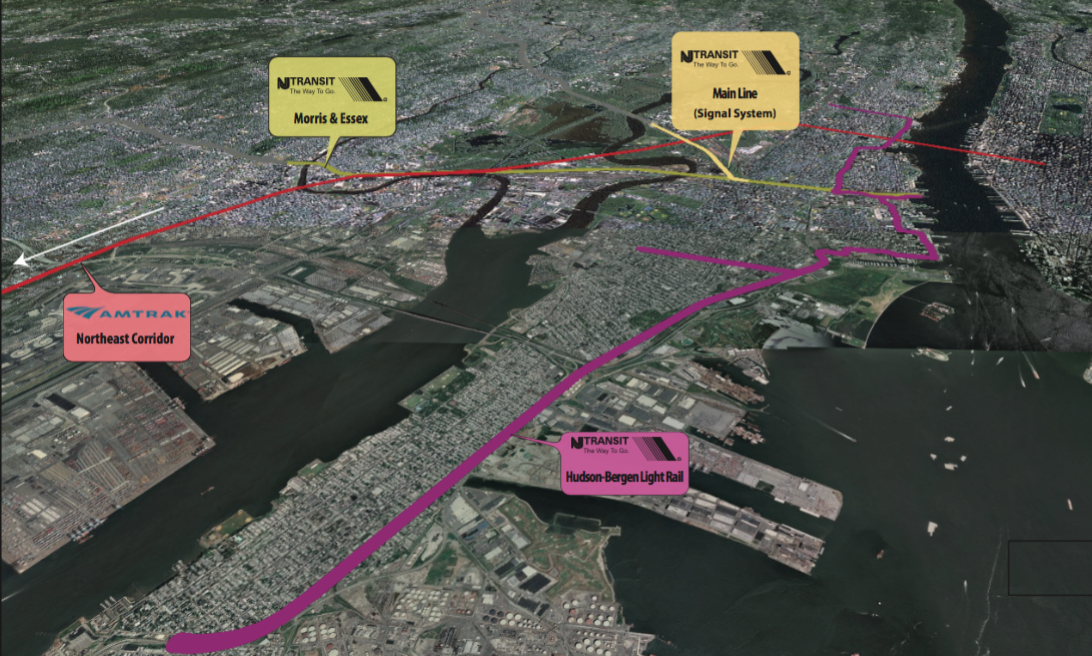
NJ TRANSIT’s rail service is vulnerable to commercial grid power outages, which are occurring more frequently due to the nature of the existing centralized power distribution system and the intensity and frequency of severe weather events. In 2012, Sandy caused major damage in New Jersey and New York and resulted in prolonged power outages to approximately 2.6 million utility customers. NJ TRANSIT’s rail service operating between job centers in New York and New Jersey was severely affected. The NJ TRANSITGRID TRACTION POWER SYSTEM will be a first-of-its-kind microgrid designed to provide highly reliable power to support a core segment of NJ TRANSIT’s critical transportation service. A microgrid is a local energy grid that can disconnect from the traditional grid and operate during black outs. It includes a natural gas-fired electric power generating plant and transmission lines that will provide electricity for trains to operate on sections of Amtrak’s Northeast Corridor and NJ TRANSIT’s Morris & Essex Lines and Hudson-Bergen Light Rail System. It will also be designed to support electrical loads at some NJ TRANSIT stations, some tunnel ventilation, pumping, and lighting loads, and the signal system on a portion of the NJ TRANSIT’s Main Line so that diesel trains can operate during power outages. This project was selected by the Federal Transit Administration (FTA) for funding as a public transportation resilience project in response to Sandy under the federal Emergency Relief Program.
BEM is providing comprehensive Environmental Program Management and Environmental Consulting services for NJ TRANSIT’s Resilience Program. BEM is preparing the Environmental Impact Statement (EIS) for the TRACTION POWER SYSTEM, which includes a facility siting analysis and will evaluate alternative technologies and plant types, in accordance with the goals and objectives established for the project. The EIS is being prepared in accordance with FTA’s NEPA implementing regulations and Section 106 of the National Historic Preservation Act. The facility will require air quality permits in compliance with Title V of the Clean Air Act and wetlands permits from the Army Corps of Engineers for new infrastructure that will be built in Cedar Creek Marsh within the Meadowlands District. A high priority project that is being monitored via the President’s Infrastructure Permitting Dashboard, BEM manages the public and agency outreach program, which has included preparation of an Agency and Public Coordination Plan, formation and coordination with a Technical Advisory Committee (TAC), a public scoping process, and development of an award-winning website, which received the 2016 Communicator Award–an award of Excellence (it’s highest honor) from the Academy of Interactive & Visual Arts (AIVA).